

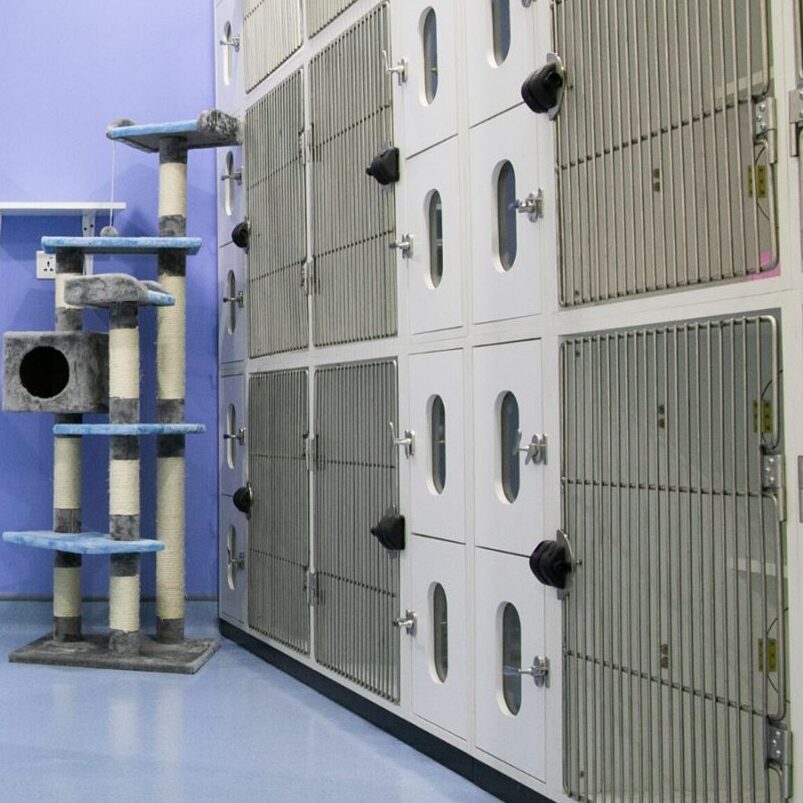
Hearing that your cat needs to be hospitalised can be frightening, especially if it is the first time you have had to leave them in veterinary care.
You may be wondering whether they will be scared, who will be watching them overnight, whether you can visit, and how you will know if their condition changes.
These are completely understandable concerns.
At The Cat Vet, we know that leaving your cat in hospital requires a great deal of trust. Our role is not only to provide the medical care your cat needs, but also to make sure you understand what is happening and feel informed throughout their stay.
Why might my cat need to be hospitalised?
Some cats need more care and monitoring than can safely be provided at home.
Hospitalisation may be recommended if your cat:
- Needs intravenous fluids or medications
- Requires oxygen support
- Is recovering from surgery or anaesthesia
- Needs pain relief and close observation
- Is seriously unwell or unstable
- Requires ongoing diagnostic investigations
- Is not eating and needs nutritional support
- Needs regular monitoring that cannot be safely managed at home
Cats are very good at hiding pain and illness, and their condition can sometimes change quickly. Being in hospital allows the veterinary team to closely monitor their progress and respond if their needs change.
Who will look after my cat overnight?
This is one of the most important questions to ask when your cat is admitted to a veterinary hospital.
At The Cat Vet, hospitalised patients receive 24-hour patient monitoring.
Your cat is not simply placed in a hospital enclosure and left until the clinic reopens the following morning. Their condition is monitored throughout the day and night, with care provided according to their individual treatment plan.
Depending on your cat’s condition, this may include monitoring:
- Temperature, heart rate and breathing
- Pain and comfort levels
- Hydration
- Appetite and food intake
- Urine and stool output
- Response to medications and treatment
- Intravenous fluid therapy
- Changes in behaviour or clinical condition
For critically unwell cats, the level and frequency of monitoring may be increased according to their needs.
Having a team available around the clock also means that changes can be recognised and acted upon without waiting until the next morning.
Why does a cat-only hospital environment matter?
Cats experience the world very differently from dogs.
They are highly sensitive to unfamiliar smells, loud noises and changes in their environment. When a cat is already unwell, additional stress can make their hospital experience more difficult.
As Dubai’s first cat-only veterinary clinic, The Cat Vet has been designed specifically around feline patients.
There are no barking dogs, and our team understands the subtle ways cats communicate fear, pain and discomfort.
Our hospital facilities include:
- Dedicated inpatient care for cats
- 24-hour patient monitoring
- Separate isolation facilities when required
- A calm, feline-focused environment
- Careful pain management
- Gentle, cat-friendly handling
- Access to advanced diagnostics and imaging
- Surgical and post-operative care
Our aim is to provide the medical attention your cat needs while reducing unnecessary stress wherever possible.
What happens when my cat is admitted?
Before admission, your veterinarian will explain why hospitalisation is recommended and what the initial treatment plan involves.
Depending on your cat’s condition, this may include blood tests, diagnostic imaging, intravenous fluids, medications, pain relief or other supportive care.
We will also discuss the expected costs and provide an estimate based on the treatment anticipated at that time.
Medicine is not always predictable, and a hospitalised patient’s needs can change. If your cat’s condition changes or additional treatment is recommended, our team will communicate with you and provide updates to the treatment plan and estimate wherever possible.
Will my cat be comfortable?
Comfort is an important part of recovery.
Hospitalised cats are provided with clean, comfortable bedding and a calm environment. We use feline-friendly approaches and pheromone support where appropriate to help reduce stress.
Pain is also actively assessed and managed. Because cats do not always show pain in obvious ways, our team looks for subtle changes in posture, facial expression, movement, appetite and behaviour.
Every cat is different. Some want gentle interaction and reassurance, while others feel safest when given a quiet space and minimal handling. Our team adapts their approach to the individual cat in front of them.
Can I visit my cat?
In many cases, yes.
Whether a visit is recommended will depend on your cat’s condition, treatment schedule and individual personality. Some cats find comfort in seeing their family, while others can become more unsettled when their owner leaves again.
For this reason, visits are arranged with the veterinary team so we can consider what is best for your cat and avoid interrupting important treatments, procedures or rest.
If a visit is appropriate, our team will help arrange a suitable time.
What should I bring?
In most cases, you do not need to bring anything other than your cat and any relevant medical information.
The hospital provides the essentials needed for your cat’s care and comfort.
If your cat is taking medication, eating a specific prescription diet or has important medical records from another veterinary clinic, please let the team know when they are admitted.
For hygiene and infection-control reasons, we may ask that personal bedding, toys or bowls remain at home.
How will I know how my cat is doing?
Being separated from your cat can be one of the hardest parts of hospitalisation.
Our team will keep you updated about your cat’s progress and explain any important changes in their condition or treatment plan.
The frequency and timing of updates may depend on how unwell your cat is and what is happening clinically, but we understand how important communication is when your cat is in our care.
Please also remember that periods of quiet and rest are an important part of recovery. The hospital team will balance communication and visits with your cat’s need for treatment, monitoring and uninterrupted rest.
When can my cat come home?
Your veterinarian will recommend discharge when they believe your cat is stable enough to continue recovering safely at home.
Before you leave, we will explain:
- Any medications your cat needs
- Feeding instructions
- Activity or rest recommendations
- What to monitor at home
- When a recheck is needed
- Which changes should prompt you to contact us
It is normal for some cats to be quieter than usual when they first return home. Your veterinary team will explain what to expect based on your cat’s condition and treatment.
Leaving your cat in hospital is difficult — but they are not alone
No cat parent wants to leave their cat behind.
But when hospitalisation is needed, it gives your cat access to the treatment, observation and support they cannot receive at home.
At The Cat Vet, our hospitalised patients receive 24-hour monitoring and care in a dedicated cat-only environment. Whether your cat is recovering from surgery, undergoing investigations or receiving treatment for a serious illness, our team is there throughout the day and night.
If you are worried about your cat or believe they may need urgent veterinary care, please contact The Cat Vet.
Emergency line: +971 54 306 5423
Frequently Asked Questions
Is my cat monitored overnight?
Yes. The Cat Vet provides 24-hour patient monitoring for hospitalised patients. Your cat’s care and monitoring continue throughout the day and night according to their individual condition and treatment plan.
Can I visit my cat while they are hospitalised?
Visits can often be arranged, depending on your cat’s condition and whether a visit is likely to be beneficial for them. Please speak with the hospital team so we can arrange an appropriate time.
What should I bring for my cat’s hospital stay?
We provide the essentials needed for your cat’s care. Please let us know about any medications, prescription diets or relevant medical records. We may ask that personal bedding, toys and bowls remain at home for hygiene and infection-control reasons.
How will I receive updates?
Our team will keep you informed about your cat’s progress and any important changes to their condition or treatment plan.
How are costs managed during a hospital stay?
You will receive a treatment plan and estimate based on the care anticipated at the time of admission. Because a hospitalised cat’s medical needs can change, the treatment plan and costs may also need to be updated. Our team will communicate with you if additional treatment or investigations are recommended.
