
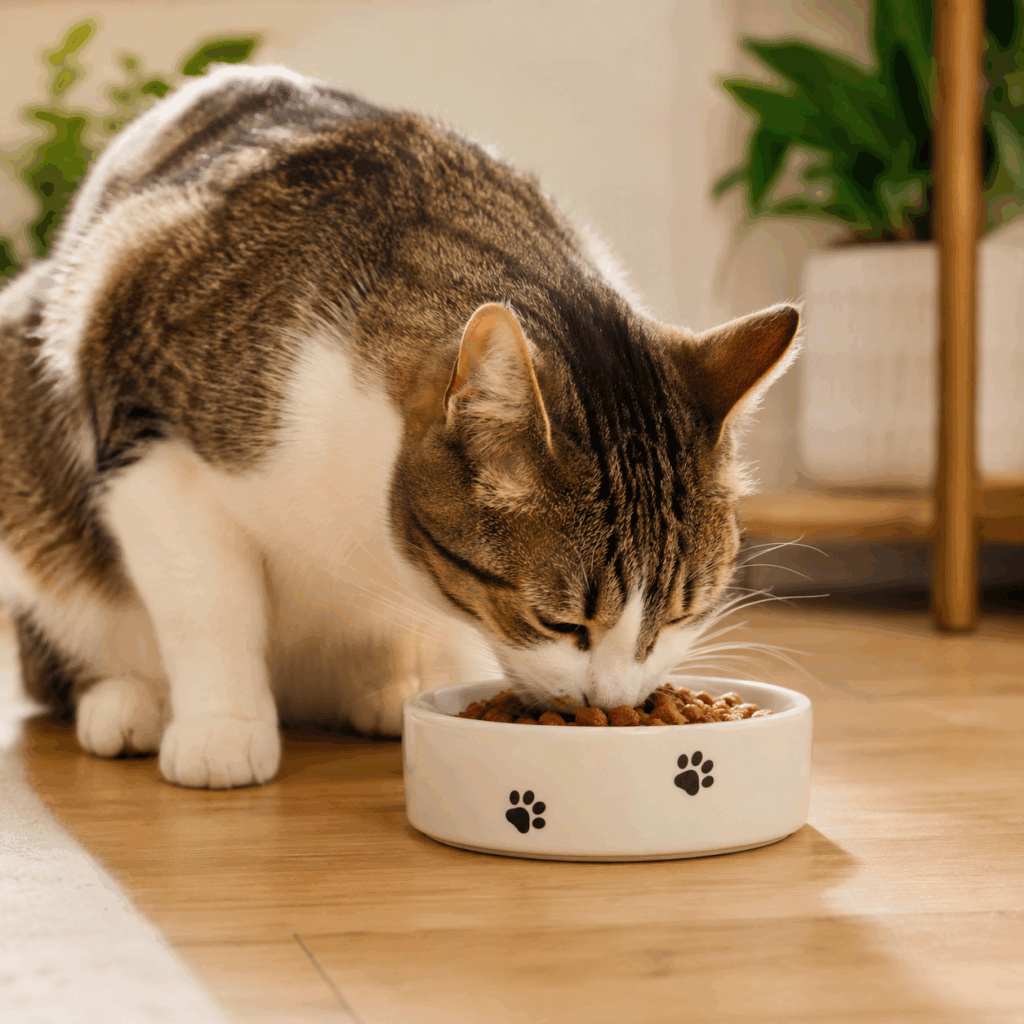
Life indoors can be ideal for cats, especially in Dubai, where staying inside protects them from traffic, extreme temperatures and other outdoor risks.
But indoor living also means many cats spend a lot of time sleeping, have fewer opportunities to explore, and may not get as much exercise as they naturally would.
The result? Indoor cats can be more prone to weight gain, boredom and certain urinary problems. The good news is that a few thoughtful choices around food, hydration and daily activity can make a big difference.
Does my indoor cat need a special diet?
Not necessarily. There is no single “best” diet for every indoor cat.
Your cat’s nutritional needs depend on their age, weight, activity level, health and individual preferences. However, because indoor cats are often less active, it is particularly important to feed the right amount—not simply choose the right food.
Some indoor cats may benefit from diets that offer:
- Controlled calories to support a healthy weight
- High-quality protein to help maintain muscle
- Additional fibre to support digestion and hairball management
- Carefully balanced nutrition for overall health
Neutered cats can also be more prone to weight gain, making portion control especially important.
Wet food or dry food – which is better?
This is one of the questions we are asked most often, and the answer depends on the individual cat.
Wet food has a high moisture content, which can be particularly helpful for cats that do not naturally drink much water. Good hydration supports urinary and kidney health and is an important part of your cat’s overall wellbeing.
Dry food can also be part of a balanced diet and is convenient for measured meals, automatic feeders and puzzle toys.
Many cats do well with a combination of wet and dry food. The most important factors are choosing a complete and balanced diet, feeding an appropriate amount, and making sure fresh water is always available.
Keeping your indoor cat at a healthy weight
It is very easy for an indoor cat to gradually gain weight, especially when food is always available or treats become part of the daily routine.
Extra weight can increase the risk of health problems including diabetes, arthritis and reduced mobility. Because cats often gain weight slowly, changes are not always obvious when you see them every day.
A few simple habits can help:
- Measure daily food portions rather than continually topping up the bowl
- Keep treats to a small part of the overall diet
- Encourage daily play and movement
- Use puzzle feeders to make mealtimes more active
- Monitor your cat’s weight and body condition regularly
If you are unsure whether your cat is overweight, ask your veterinary team. Sometimes even a relatively small amount of extra weight can be significant for a cat.
Hydration matters
Cats naturally tend to have a low thirst drive, and some are surprisingly reluctant to drink from a water bowl.
You can encourage better hydration by:
- Including wet food in your cat’s diet where appropriate
- Providing several water stations around the home
- Trying a water fountain if your cat prefers moving water
- Keeping water bowls away from litter trays
- Using wide, comfortable bowls and refreshing the water regularly
Every cat has different preferences, so it can be worth experimenting to discover what encourages yours to drink more.
Make mealtimes more interesting
For cats, eating is naturally connected to hunting and exploration. A bowl of food placed in the same spot every day may be convenient, but it offers very little mental stimulation.
Indoor cats can benefit from simple ways to make feeding more interesting, such as:
- Puzzle feeders
- Slow feeders
- Small “food hunts” around the home
- Interactive feeding toys
- Dividing the daily food allowance into several smaller meals
These activities can encourage movement, reduce boredom and allow your cat to use some of their natural hunting behaviours.
Just remember that any food used for games or enrichment should come from your cat’s normal daily allowance, otherwise those extra “little snacks” can quickly add up!
What about prescription diets?
Some cats need a specific veterinary diet to help manage a medical condition. These may include diets designed to support:
- Urinary health
- Healthy weight loss
- Kidney disease
- Digestive conditions
- Other individual medical needs
A prescription diet should be recommended based on your cat’s diagnosis and monitored as part of their ongoing veterinary care.
The best diet is the one that suits your cat
There is no perfect feeding plan for every indoor cat.
A young, active cat has very different needs from a senior cat who spends most of the day asleep. A cat with urinary problems may need a different approach from one who needs to lose weight.
At The Cat Vet, we consider the whole cat; their age, health, body condition, lifestyle and preferences before making nutritional recommendations.
With the right balance of nutrition, hydration, activity and enrichment, indoor cats can enjoy happy, healthy and fulfilling lives.
If you would like personalised advice about your cat’s diet, weight or feeding routine, please contact The Cat Vet to book a consultation with one of our feline veterinarians or veterinary nurses.
Frequently Asked Questions
What is the best food for an indoor cat?
There is no single best food for every indoor cat. The right choice depends on your cat’s age, weight, health, activity level and individual needs.
Should indoor cats eat wet food every day?
Many cats benefit from wet food because of its high moisture content, particularly those that do not drink much water. Your veterinary team can advise you on the most suitable feeding plan for your cat.
Why do indoor cats gain weight so easily?
Indoor cats are often less active and can consume more calories than they use. Free-feeding, oversized portions and frequent treats can all contribute to gradual weight gain.
Are puzzle feeders good for indoor cats?
Yes. Puzzle feeders can provide mental stimulation, encourage natural hunting behaviours and make mealtimes more active and engaging.
How much should I feed my indoor cat?
The right amount depends on your cat’s weight, age, activity level and the calorie content of their food. Feeding guides can be useful as a starting point, but individual cats may need more or less.
Does my indoor cat need special “indoor cat” food?
Not always. Some indoor-specific diets can be helpful, but the most important considerations are that the food is complete and balanced, appropriate for your cat, and fed in the correct amount.
